Full Story
“I’ve spent my life exploring how memory, story, and psychology shape who we are and how we stay connected.”
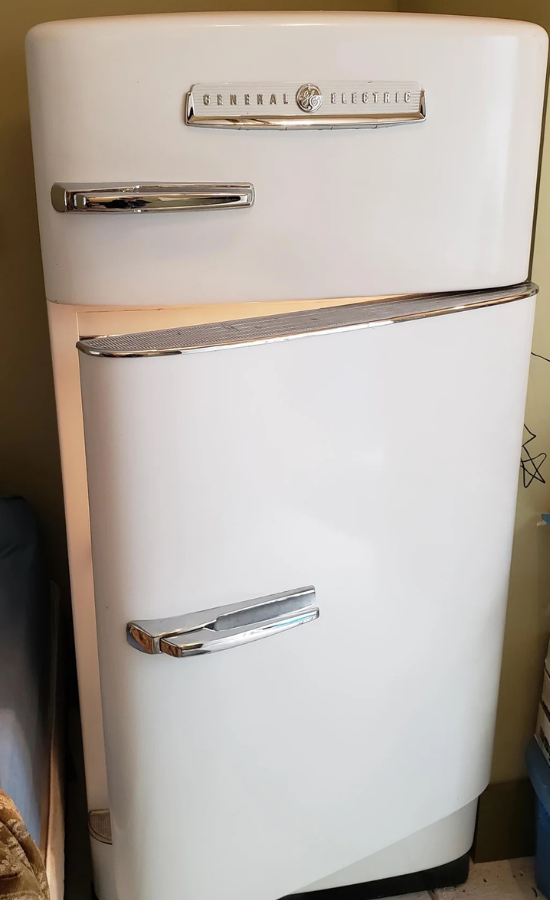
Where it begins
The photograph that explains the work.
You can read the degrees and credentials below. But the truth is that this photograph of my grandmother's old refrigerator probably tells you more about my work than any of them.
I stood in that kitchen doorway so often that the sound of the seal releasing, the cool air escaping, and the small rituals that followed became part of my internal landscape. The glass of milk poured the same way every time. The sandwich made without asking what I wanted, because she already knew.
Those moments taught me how memory lives in objects and gestures — how meaning settles into the body, and how simple acts of care become emotional anchors that a person carries for the rest of their life.
That fridge showed me what it feels like to be known and tended to.
It also showed me what is lost when nobody thinks to ask.
The Work
Twenty-five years.
One conviction.
I am a media psychologist and social gerontologist working where memory, culture, design, and aging meet. For 25 years I have supported individuals, families, and organizations through the transitions that don't come with instructions — caregiving, memory change, legacy, grief, and the quieter questions of what we want to leave behind and how we want to be remembered while we are still here.
My work begins from a conviction that has never changed:
The conditions for presence, dignity, and connection can be built deliberately. In the right environment, with the right language, with the right relational structure, people stay more fully themselves. That is not wishful thinking. It is designable.
What I have built over 25 years is a methodology, a way of working with people that integrates clinical practice, narrative therapy, reminiscence work, somatic awareness, and experience design. It draws on memory psychology, media studies, and the evidence base around what art, music, objects, and sensory experience do to the brain and the body. It takes the full person seriously — not just their needs, but their humor, their aesthetics, their language, their pleasures, and the stories they most want held.
I work with individuals and families navigating the threshold moments of later life — identity in transition, the beginning of memory change, the question of legacy, the work of staying present to one another through difficulty. I also work with organizations — cultural institutions, healthcare environments, care facilities, design practices — helping them build conditions where older adults remain visible, valued, and recognized.
I speak and train internationally, bringing this work to professional audiences who are ready to think differently about how we age, how we design for aging, and what it means to see a person fully at every stage of life.
Credentials
The degrees that made the methodology possible.
Three degrees. Not a straight line. Each one adding a layer the others needed.
PhD
Media Psychology
Master of Human Services
Social Gerontology
MA
Psychology
Certifications
The psychology came first — how people make meaning, how media shapes the stories we tell about ourselves and each other. The gerontology came next — the specific and underserved territory of aging, and what it costs people when the systems around them fail to see them clearly. The design certification came later, and it named something I had already been doing intuitively for years: the deliberate construction of experiences, environments, and relational structures that hold people more fully.
The marriage and family therapy certification is where the relational work lives — the families in the room together, the dynamics that shape how a person's story gets held or lost, the conversations that need a skilled navigator to happen at all.
Together they describe a practitioner who approaches aging not as a medical problem or a social challenge but as a design problem — one that, when solved well, produces presence, dignity, and connection.
The Practice
SenStoria.
Worth Considering.
The work, today.
I am the founder of SenStoria — a practice dedicated to memory, meaning, and the design of experiences that hold people more fully across the arc of aging.
I write about memory, aging, culture, and what it means to stay present to yourself and the people you love in Worth Considering, my Substack publication. I write about what I notice — in film, in design, in the small moments that almost slip by — and try to leave readers with something useful to take with them.
I am based in New York City and work globally — with individuals, families, organizations, and institutions across the United States and Europe.
PhD
Media Psychology
Master of Human Services
Social Gerontology
MA
Psychology
Certifications
The psychology came first — how people make meaning, how media shapes the stories we tell about ourselves and each other. The gerontology came next — the specific and underserved territory of aging, and what it costs people when the systems around them fail to see them clearly. The design certification came later, and it named something I had already been doing intuitively for years: the deliberate construction of experiences, environments, and relational structures that hold people more fully.
The marriage and family therapy certification is where the relational work lives — the families in the room together, the dynamics that shape how a person's story gets held or lost, the conversations that need a skilled navigator to happen at all.
Together they describe a practitioner who approaches aging not as a medical problem or a social challenge but as a design problem — one that, when solved well, produces presence, dignity, and connection.